| My Fair Lady, Act I: "Why Can't the English?" (Henry Higgins & Colonel Pickering) (original) | My Fair Lady, Act I: "Why Can't the English?" (Henry Higgins & Colonel Pickering) (traducción) |
|---|---|
| Henry Higgins: Look at her, a prisoner of the gutter, | Henry Higgins: Mírala, una prisionera de la cuneta, |
| Condemned by every syllable she utters | Condenada por cada sílaba que pronuncia |
| By right she should be taken out and hung, | Por derecho debería ser sacada y colgada, |
| For the cold-blooded murder of the English tongue. | Por el asesinato a sangre fría de la lengua inglesa. |
| Eliza Doolittle: Aaoooww! | Eliza Doolittle: ¡Aaaaaoww! |
| Henry (imitating her): Aaoooww! | Henry (imitándola): ¡Aaoooww! |
| Heavens! | ¡Cielos! |
| What a sound! | ¡Qué sonido! |
| This is what the British population, | Esto es lo que la población británica, |
| Calls an elementary education. | Llama a una educación primaria. |
| Pickering: Oh Come sir, I think you picked a poor example. | Pickering: Oh, vamos, señor, creo que escogió un mal ejemplo. |
| Henry: Did I? | Enrique: ¿Lo hice? |
| Hear them down in Soho Square, | Escúchalos en Soho Square, |
| Dropping «h's» everywhere. | Soltar «h» por todas partes. |
| Speaking English anyway they like. | Hablando inglés como quieran. |
| You sir, did you go to school? | Señor, ¿fuiste a la escuela? |
| Man: Wadaya tike me for, a fool? | Hombre: ¿Wadaya me toma por tonto? |
| Henry: No one taught him 'take' instead of 'tike! | Henry: ¡Nadie le enseñó 'take' en lugar de 'tike! |
| Hear a Yorkshireman, or worse, | Escuche a un hombre de Yorkshire, o peor, |
| hear a Cornishman converse. | escuchar a un hombre de Cornualles conversar. |
| I’d rather hear a choir singing flat. | Prefiero escuchar un coro cantando plano. |
| Chickens, cackling in a barn, just like this one (pointing to Eliza) | Pollitos, cacareando en un granero, igualito a este (señalando a Eliza) |
| Eliza: Gaaarn | Eliza: Gaarn |
| Henry (writing, imitating Eliza): Gaaarn. | Henry (escribiendo, imitando a Eliza): Gaaarn. |
| I ask you Sir, what sort of word is that? | Le pregunto, señor, ¿qué tipo de palabra es esa? |
| (to Pickering) | (a Pickering) |
| It’s «aoow» and «gaarn» that keep her in her place | Son "aoow" y "gaarn" los que la mantienen en su lugar |
| Not her wretched clothes and dirty face | No su ropa miserable y su cara sucia |
| Why can’t the English teach their children how to speak? | ¿Por qué los ingleses no pueden enseñar a sus hijos a hablar? |
| This verbal class distinction, by now, | Esta distinción de clase verbal, por ahora, |
| Should be antique. | Debería ser antiguo. |
| If you spoke as she does, sir, | Si hablara como ella, señor, |
| Instead of the way you do, | En lugar de la forma en que lo haces, |
| Why, you might be selling flowers, too! | ¡Por qué, también podrías estar vendiendo flores! |
| Pickering: I beg your pardon! | Pickering: ¡Disculpe! |
| Henry: An Englishman’s way of speaking absolutely classifies him, | Henry: La forma de hablar de un inglés lo clasifica absolutamente, |
| The moment he talks he makes some other | En el momento en que habla, hace algunas otras |
| Englishman despise him. | Los ingleses lo desprecian. |
| One common language I’m afraid we’ll never get. | Un lenguaje común que me temo que nunca conseguiremos. |
| Oh, why can’t the English learn to | Oh, ¿por qué los ingleses no pueden aprender a |
| set a good example to people whose | dar un buen ejemplo a las personas cuyas |
| English is painful to your ears? | ¿El inglés es doloroso para tus oídos? |
| The Scotch and the Irish leave you close to tears. | El escocés y el irlandés te dejan al borde de las lágrimas. |
| There even are places where English completely | Incluso hay lugares donde el inglés es completamente |
| disappears. | desaparece |
| Well, in America, they haven’t used it for years! | Bueno, en Estados Unidos, ¡no lo han usado durante años! |
| Why can’t the English teach their children how to speak? | ¿Por qué los ingleses no pueden enseñar a sus hijos a hablar? |
| Norwegians learn Norwegian; | los noruegos aprenden noruego; |
| the Greeks have taught their Greek. | los griegos han enseñado su griego. |
| In France every Frenchman knows | En Francia todo francés sabe |
| his language from «A» to «Zed» | su idioma de «A» a «Zed» |
| The French never care what they do, actually, | A los franceses nunca les importa lo que hacen, en realidad, |
| as long as they pronounce it properly. | siempre y cuando lo pronuncien correctamente. |
| Arabians learn Arabian with the speed of summer lightning. | Los árabes aprenden árabe a la velocidad de un rayo de verano. |
| And Hebrews learn it backwards, | Y los hebreos lo aprenden al revés, |
| which is absolutely frightening. | lo cual es absolutamente aterrador. |
| Use proper English you’re regarded as a freak. | Usa un inglés apropiado, eres considerado un monstruo. |
| Why can’t the English, | ¿Por qué los ingleses no pueden, |
| Why can’t the English learn to speak? | ¿Por qué los ingleses no pueden aprender a hablar? |
Traducción de la letra de la canción My Fair Lady, Act I: "Why Can't the English?" (Henry Higgins & Colonel Pickering) - Фредерик Лоу
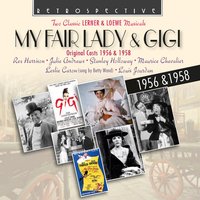
Información de la canción En esta página puedes leer la letra de la canción My Fair Lady, Act I: "Why Can't the English?" (Henry Higgins & Colonel Pickering) de -Фредерик Лоу
Canción del álbum: My Fair Lady & Gigi
En el género:Саундтреки
Fecha de lanzamiento:31.12.2010
Idioma de la canción:Inglés
Sello discográfico:Wyastone Estate
Seleccione el idioma al que desea traducir:
¡Escribe lo que piensas sobre la letra!
Otras canciones del artista:
| Nombre | Año |
|---|---|
| 2015 | |
| 2023 | |
| 2014 | |
| 2020 | |
| 2014 | |
| 2011 | |
| 2014 | |
| 2013 | |
| 2013 | |
Just You Wait ft. Rex Harrison, Фредерик Лоу | 2014 |
| 2012 | |
| 2014 | |
| 2019 | |
Gigì ft. Фредерик Лоу | 2012 |
| 2013 | |
| 2013 | |
| 2013 | |
| 2013 | |
| 2013 | |
| 2013 |
Nuevos textos y traducciones en el sitio:
| Nombre | Año |
|---|---|
| 1980 | |
| 1980 | |
| 1980 | |
| 1980 | |
| 2015 | |
| 2000 | |
| 2021 | |
| 2019 | |
| 2019 | |
| 2021 |