| Main Title Overture Rock Island Iowa Stubborn (original) | Main Title Overture Rock Island Iowa Stubborn (traducción) |
|---|---|
| All aboard! | ¡Todos a bordo! |
| Credit is no good for an ocean salesman. | El crédito no es bueno para un vendedor de océanos. |
| How far you goin', Fred? | ¿Qué tan lejos vas, Fred? |
| Wherever the people are as green as the money. | Dondequiera que la gente sea tan verde como el dinero. |
| Fred. | Fred. |
| What’s the matter with Fred? | ¿Qué le pasa a Fred? |
| Charlie, you’re an anvil salesman. | Charlie, eres un vendedor de yunques. |
| Your firm give credit? | ¿Su empresa da crédito? |
| No sir! | ¡No señor! |
| Nor anybody else. | Ni nadie más. |
| River City! | ¡Ciudad del Río! |
| Next station stop River City highway! | ¡Próxima estación, parada en la autopista River City! |
| Cash for the merchandise | Efectivo por la mercadería |
| Cash for the button hooks | Dinero en efectivo para los ganchos de botón |
| Cash for the cotton goods | Efectivo por los artículos de algodón. |
| Cash for the hard goods | Dinero en efectivo para los bienes duraderos |
| Cash for the fancy goods | Dinero en efectivo para los artículos de lujo |
| Cash for the soft goods | Dinero en efectivo para los productos blandos |
| Cash for the noggins and the pickins and the firkins | Dinero en efectivo para los noggins y los pickins y los firkins |
| Cash for the hog’s head, cask, and demi-jot | Efectivo por cabeza de cerdo, barril y media jota |
| Cash for the crackers and the pickles and the flypaper | Dinero en efectivo para las galletas y los pepinillos y el papel matamoscas |
| Look | Mirar |
| Whattya talk, whattya talk, whattya talk, whattya talk, whattya talk? | ¿Qué hablas, qué hablas, qué hablas, qué hablas, qué hablas? |
| Whatya gettin' at? | ¿A qué te refieres? |
| Whattya talk- | Que habla- |
| You can talk, you can talk | Puedes hablar, puedes hablar |
| You can bicker, you can talk | Puedes discutir, puedes hablar |
| You can bicker, bicker, bicker | Puedes discutir, discutir, discutir |
| You can talk, you can talk | Puedes hablar, puedes hablar |
| You can talk talk talk talk bicker bicker bicker | Puedes hablar hablar hablar hablar discutir discutir discutir |
| You can talk all you want | Puedes hablar todo lo que quieras |
| But it’s different than it was | Pero es diferente de lo que era |
| No it ain’t, no it ain’t, | No, no lo es, no, no lo es, |
| But ya gotta know the territory | Pero tienes que conocer el territorio |
| Ch, ch, ch, ch, ch, ch | Ch, ch, ch, ch, ch, ch |
| Why did the model t-4 | ¿Por qué el modelo t-4 |
| Make the trouble, make the people want to go | Haz el problema, haz que la gente quiera ir |
| Wanna get, wanna get, wanna get up and go | quiero conseguir, quiero conseguir, quiero levantarme e irme |
| 7 8 9 10 12 14 22 23 miles to the county, see | 7 8 9 10 12 14 22 23 millas hasta el condado, consulte |
| Yes sir, yes sir | si señor, si señor |
| Who’s gonna patronize the little-bitty two-by-four kinda store anymore? | ¿Quién va a patrocinar más la pequeña tienda de dos por cuatro? |
| Whattya talk, whattya talk! | ¡Qué habla, qué habla! |
| Whattya gettin' at? | ¿A qué te refieres? |
| Go on, go on! | ¡Adelante, adelante! |
| Go on with the hog’s head, cask, and demi-jot! | ¡Adelante con la cabeza de cerdo, el tonel y la media jota! |
| Go on with the sugar barrel, pickel barrel, milk can! | ¡Adelante con el barril de azúcar, el barril de pepinillos, la lata de leche! |
| Go on with the gum and the pail and the tears! | ¡Sigue con el chicle, el cubo y las lágrimas! |
| Ever meet a fella by the name of hill? | ¿Alguna vez conociste a un tipo con el nombre de hill? |
| Hill? | ¿Colina? |
| Hill? | ¿Colina? |
| Hill? | ¿Colina? |
| Hill? | ¿Colina? |
| Hill? | ¿Colina? |
| Hill? | ¿Colina? |
| Hill? | ¿Colina? |
| Hill? | ¿Colina? |
| No! | ¡No! |
| Just a minute just a minute just a minute! | ¡Solo un minuto solo un minuto solo un minuto! |
| Never hearda any salesman Hill | Nunca escuché a ningún vendedor Hill |
| Now he doesn’t know the territory | Ahora no conoce el territorio |
| Doesn’t know the territory | no conoce el territorio |
| What’s the fella’s line? | ¿Cuál es la línea del chico? |
| Never worries 'bout his line! | ¡Nunca te preocupes por su línea! |
| Never worries 'bout his line | Nunca te preocupes por su línea |
| Not a dog-gone thing | No es una cosa perdida |
| He’s just a bang-beat, bell-ringin', big-hall, great go-necker, nothing | Es solo un bang-beat, campanero, gran salón, gran traficante, nada |
| rit-thrower never-time-a-bullseye salesman! | rit-thrower nunca-time-a-bullseye vendedor! |
| That Professor Harold Hill, Harold Hill | Ese profesor Harold Hill, Harold Hill |
| What’s the fella’s line? | ¿Cuál es la línea del chico? |
| What’s his line? | ¿Cuál es su línea? |
| He’s a fake and he doesn’t know the territory! | ¡Es un falso y no conoce el territorio! |
| Look whattya talk, whattya talk, whattya talk, whattya talk? | Mira qué hablas, qué hablas, qué hablas, qué hablas. |
| He’s a music man | el es un hombre de la musica |
| He’s a what? | ¿Él es un qué? |
| He’s a what? | ¿Él es un qué? |
| He’s a music man! | ¡Es un hombre de la música! |
| And he sells clarinets to the kids in the town | Y vende clarinetes a los niños del pueblo |
| with the big trombones, | con los grandes trombones, |
| and the ratt-a-tatt drums. | y los tambores ratt-a-tatt. |
| Big brass bass, big brass bass! | ¡Gran bajo de metal, gran bajo de metal! |
| And the piccolo, the piccolo, | Y el flautín, el flautín, |
| with uniforms too! | ¡con uniformes también! |
| And a shiny gold braid on the coat | Y una trenza de oro brillante en el abrigo |
| and a big red stripe runnin'. | y una gran franja roja corriendo. |
| Well, I don’t know much about bands | Bueno, no sé mucho sobre bandas. |
| But I do know you can’t make a livin' selling big trombones. | Pero sé que no puedes ganarte la vida vendiendo grandes trombones. |
| No, sir! | ¡No señor! |
| Mandolin' picks, perhaps, | Selecciones de mandolina, tal vez, |
| and here and there a guitar. | y aquí y allá una guitarra. |
| No, the fella sells bands. | No, el tipo vende bandas. |
| Boy’s bands! | ¡Bandas de chicos! |
| I don’t know how he does it, but he lives like a king | No sé cómo lo hace, pero vive como un rey. |
| and he dallies and he gathers and he plucks and he shines | y se entretiene y recoge y arranca y brilla |
| And when the man dances, certainly boys, what else? | Y cuando el hombre baila, ciertamente chicos, ¿qué más? |
| The piper pays him! | ¡El gaitero le paga! |
| Yes, sir! | ¡Sí, señor! |
| Yes sir! | ¡Sí, señor! |
| Yes sir! | ¡Sí, señor! |
| Yes sir! | ¡Sí, señor! |
| When the man dances, certainly boys, what else? | Cuando el hombre baila, ciertamente chicos, ¿qué más? |
| The piper pays him! | ¡El gaitero le paga! |
| Yesssssssir | Sísssssseñor |
| Yessssssir | Sissssseñor |
| But he doesn’t know the territory! | ¡Pero él no conoce el territorio! |
| River City! | ¡Ciudad del Río! |
| Station stop River City! | ¡Parada de la estación River City! |
| Oh, there’s nothing halfway | Oh, no hay nada a mitad de camino |
| About the Iowa way to treat you when we treat you | Acerca de la forma en que Iowa lo trata cuando lo tratamos |
| Which we may not do at all | Lo que no podemos hacer en absoluto |
| There’s an Iowa kind | Hay un tipo de Iowa |
| Of special chip on the shoulder attitude we’ve never been without | De chip especial en la actitud del hombro que nunca hemos estado sin |
| That we recall | que recordamos |
| We can be cold as the falling thermometer in December if you ask about the | Podemos ser tan fríos como el termómetro que cae en diciembre si preguntas sobre el |
| weather in July | tiempo en julio |
| And we’re so by-God stubborn we could stand | Y somos tan obstinados por Dios que podríamos soportar |
| Touch noses for a week at a time | Tocar narices durante una semana a la vez |
| And never see eye to eye! | ¡Y nunca se vean a los ojos! |
| But look ahead, you’re welcome! | Pero mira hacia adelante, ¡de nada! |
| Join us at the picnic! | ¡Únase a nosotros en el picnic! |
| You can eat your fill of all the food you bring yourself. | Puedes comer hasta saciarte de toda la comida que traigas tú mismo. |
| You really ought to give Iowa a try! | ¡Realmente deberías probar Iowa! |
| Provided you are contrary. | Siempre que esté en contra. |
| We can be cold as the falling thermometer in December if you | Podemos ser tan fríos como el termómetro que baja en diciembre si |
| ask about the weather in July | preguntar sobre el tiempo en julio |
| And we’re so by-God stubborn we could | Y somos tan obstinados por Dios que podríamos |
| Stand touching noses a week at a time | Párese tocando las narices una semana a la vez |
| And never see eye to eye | Y nunca vernos a los ojos |
| But we’ll give you our shirt | Pero te daremos nuestra camisa. |
| And a pack to go with it | Y un paquete para acompañar |
| If your crop should happen to die | Si su cultivo llegara a morir |
| So what the heck! | Entonces, ¡qué diablos! |
| You’re welcome | Eres bienvenido |
| Glad to have you with us! | ¡Encantado de tenerte con nosotros! |
| Even though we may not ever mention it again | Aunque no lo mencionemos nunca más |
| You really ought to give Iowa | Realmente deberías dar a Iowa |
| Not bad Iowa | No está mal Iowa |
| If you ---?--- | Si tu ---?--- |
| Ought to give Iowa a try! | ¡Debería probar Iowa! |
Traducción de la letra de la canción Main Title Overture Rock Island Iowa Stubborn - The Orchestra, The Ensemble, The Traveling Salesman
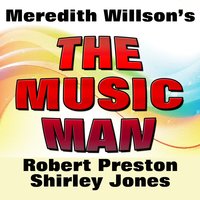
Información de la canción En esta página puedes leer la letra de la canción Main Title Overture Rock Island Iowa Stubborn de -The Orchestra
En el género:Иностранная авторская песня
Fecha de lanzamiento:23.06.2013
Idioma de la canción:Inglés
Seleccione el idioma al que desea traducir:
¡Escribe lo que piensas sobre la letra!
Otras canciones del artista:
| Nombre | Año |
|---|---|
| 2006 | |
| 2006 | |
| 2006 | |
| 2016 | |
| 2015 |