| Across The Alley From The Alamo (original) | Across The Alley From The Alamo (traducción) |
|---|---|
| Across the alley from the Alamo | Al otro lado del callejón del Álamo |
| Lived a pinto pony and a Navajo | Vivía un pony pinto y un navajo |
| Who sang a sort of Indian Hideho | Que cantaba una especie de Hideho indio |
| To the people passing by | A la gente que pasa |
| The pinto spent his time a swichin' flies | El pinto pasó su tiempo cambiando moscas |
| And the Navajo watched the lazy skies | Y los navajos miraban los cielos perezosos |
| And very rarely did they ever rest their eyes | Y muy rara vez descansaron sus ojos |
| On the people passing by | Sobre la gente que pasa |
| One day they went a walkin' | Un día fueron a caminar |
| Along the railroad track | A lo largo de la vía del tren |
| They were swishin' not lookin' | Estaban swishin 'no mirando' |
| Toot toot | Toot Toot |
| They never came back | nunca regresaron |
| Across the alley from the Alamo | Al otro lado del callejón del Álamo |
| When the summer sun decides to settle low | Cuando el sol de verano decide asentarse bajo |
| A fly sings an Indian Hideho | Una mosca canta un indio Hideho |
| To the people passing by | A la gente que pasa |
| One day they went a walkin' | Un día fueron a caminar |
| Along the railroad track | A lo largo de la vía del tren |
| They were swishin' not lookin' | Estaban swishin 'no mirando' |
| Toot toot | Toot Toot |
| They never came back | nunca regresaron |
| Across the alley from the Alamo | Al otro lado del callejón del Álamo |
| Lived a pinto pony and a Navajo | Vivía un pony pinto y un navajo |
| Who used to bake frijoles in cornmeal dough | ¿Quién solía hornear frijoles en masa de harina de maíz? |
| To the people passing by | A la gente que pasa |
Traducción de la letra de la canción Across The Alley From The Alamo - Bob Wills
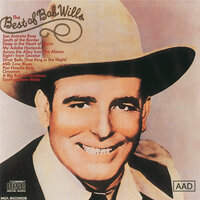
Información de la canción En esta página puedes leer la letra de la canción Across The Alley From The Alamo de -Bob Wills
En el género:Кантри
Fecha de lanzamiento:31.12.1966
Idioma de la canción:Inglés
Seleccione el idioma al que desea traducir:
¡Escribe lo que piensas sobre la letra!
Otras canciones del artista:
| Nombre | Año |
|---|---|
| 2008 | |
White Cross on Okinara ft. His Texas Playboys | 2013 |
| 2017 | |
| 2017 | |
| 2013 | |
| 2018 | |
| 2008 | |
| 2018 | |
| 2020 | |
| 2018 | |
| 2018 | |
| 2008 | |
| 2008 | |
| 2008 | |
New Spanish Two-Step ft. Bob Willis | 2006 |
Santa's on His Way ft. His Texas Playboys | 2015 |
| 2011 | |
| 2011 | |
| 2011 | |
| 2012 |