| Teachers (original) | Teachers (traducción) |
|---|---|
| I met a woman long ago | Conocí a una mujer hace mucho tiempo |
| Her hair the black that black can go | Su cabello el negro que el negro puede ir |
| Are you a teacher of the heart? | ¿Eres un maestro del corazón? |
| Soft, she answered no | Suave, ella respondió que no |
| I met a girl across the sea | Conocí a una chica al otro lado del mar |
| Her hair the gold that gold can be | Su cabello el oro que el oro puede ser |
| Are you a teacher of the heart? | ¿Eres un maestro del corazón? |
| Yes‚ but not for thee | Sí, pero no para ti |
| I met a man who lost his mind | Conocí a un hombre que perdió la cabeza |
| In some lost place I had to find | En algún lugar perdido tuve que encontrar |
| «Follow me‚» the wise man said | «Sígueme», dijo el sabio |
| But he walked behind | Pero él caminó detrás |
| I walked into a hospital | Entré en un hospital |
| Where no-one was sick and no-one was well | Donde nadie estaba enfermo y nadie estaba bien |
| When at night the nurses left | Cuando en la noche se fueron las enfermeras |
| I could not walk at all | No podía caminar en absoluto |
| Morning came and then came noon | Llegó la mañana y luego llegó el mediodía |
| Dinnertime‚ a scalpel blade | La hora de la cena, una hoja de bisturí |
| Lay beside my silver spoon | Acuéstese al lado de mi cuchara de plata |
| Some girls wander by mistake | Algunas chicas deambulan por error |
| Into the mess that scalpels make | En el lío que hacen los bisturíes |
| Are you the teachers of my heart? | ¿Sois los maestros de mi corazón? |
| We teach old hearts to break | Enseñamos viejos corazones a romper |
| One morning I woke up alone | Una mañana me desperté solo |
| The hospital and the nurses gone | El hospital y las enfermeras se fueron |
| Have I carved enough my Lord? | ¿He tallado bastante mi Señor? |
| Child, you are a bone | Niño, eres un hueso |
| I ate, I ate‚ I ate, I ate, I ate | Comí, comí, comí, comí, comí |
| I spent my hatred everyplace | Gasté mi odio en todos lados |
| On every word‚ on every face | En cada palabra, en cada rostro |
| Someone gave me wishes | Alguien me dio deseos |
| And I wished for an embrace | Y deseé un abrazo |
| Several girls embraced me then | Varias chicas me abrazaron entonces |
| I was embraced by men | Fui abrazado por hombres |
| Is my passion perfect? | ¿Es perfecta mi pasión? |
| No, do it once again | No, hazlo una vez más |
| I was handsome, I was strong | yo era guapo, yo era fuerte |
| I knew the words of every song | Sabía las palabras de cada canción |
| Did my singing please you? | ¿Te agradó mi canto? |
| No, the words you sang were wrong | No, las palabras que cantaste estaban mal |
| Who is it whom I address? | ¿Quién es a quien me dirijo? |
| Who takes down what I confess? | ¿Quién toma nota de lo que confieso? |
| Are you the teachers of my heart? | ¿Sois los maestros de mi corazón? |
| We teach old hearts to rest | Enseñamos a los viejos corazones a descansar |
| Oh teachers are my lessons done? | Oh, maestros, ¿han terminado mis lecciones? |
| I cannot do another one | no puedo hacer otra |
| They laughed and laughed and said | Se rieron y se rieron y dijeron |
| «Well child, are your lessons done? | «Bien niño, ¿ya terminaron tus lecciones? |
| Are your lessons done? | ¿Tus lecciones terminaron? |
| Are your lessons done? | ¿Tus lecciones terminaron? |
| Are your lessons done? | ¿Tus lecciones terminaron? |
| Are your lessons done? | ¿Tus lecciones terminaron? |
| Are your lessons done? | ¿Tus lecciones terminaron? |
| Are your lessons done? | ¿Tus lecciones terminaron? |
| Are your lessons done?» | ¿Han terminado sus lecciones?» |
Traducción de la letra de la canción Teachers - Leonard Cohen
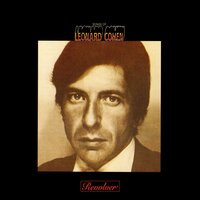
Información de la canción En esta página puedes leer la letra de la canción Teachers de -Leonard Cohen
Fecha de lanzamiento:26.12.1967
Idioma de la canción:Inglés
Seleccione el idioma al que desea traducir:
¡Escribe lo que piensas sobre la letra!
Otras canciones del artista:
| Nombre | Año |
|---|---|
| 2012 | |
| 2015 | |
| 1971 | |
| 2014 | |
| 1992 | |
| 2014 | |
| 1967 | |
| 1967 | |
| 1967 | |
| 1967 | |
| 1967 | |
| 1971 | |
| 2011 | |
| 2006 | |
| 2013 | |
Hallelujah (Made Famous by Alexandra Burke) ft. St. Martin’s Symphony Of Los Angeles, Johann Heinrich Jr. | 2009 |