| Mrs. Mcgrath (original) | Mrs. Mcgrath (traducción) |
|---|---|
| «Mrs. | "Sra. |
| McGrath,"the sergeant said, | McGrath", dijo el sargento, |
| «Would you like a soldier | «¿Te gustaría un soldado |
| Of your son, Ted? | ¿De tu hijo, Ted? |
| With a scattered coat and a big cocked hat, | Con un abrigo disperso y un gran sombrero de tres picos, |
| Mrs. McGrath wouldn you like that?» | Sra. McGrath, ¿le gustaría eso?» |
| With a too-ri-a, fo-diddle- di-a, | Con un demasiado-ri-a, fo-diddle-di-a, |
| Too-ri-o-ri-o-ri-a | Demasiado-ri-o-ri-o-ri-a |
| With a too-ri-a, fo-diddle-di-a | Con un demasiado-ri-a, fo-diddle-di-a |
| Too-ri-o-ri-o-ri-a | Demasiado-ri-o-ri-o-ri-a |
| Mrs. McGrath lived on the shore | La Sra. McGrath vivía en la orilla |
| For the space of seven long years or more | Por el espacio de siete largos años o más |
| She spied a ship come in to the bay | Ella vio un barco que llegaba a la bahía |
| With her son from far away | Con su hijo desde lejos |
| «Oh, Captain dear, where have ye been. | «Oh, querido capitán, ¿dónde has estado? |
| Ye been sailin' the Mediterranean'. | Has estado navegando por el Mediterráneo. |
| Have ye news of my son Ted. | ¿Tienes noticias de mi hijo Ted? |
| Is he livin' or is he dead?» | ¿Está vivo o está muerto?» |
| With a too-ri-a, fo-diddle-di-a | Con un demasiado-ri-a, fo-diddle-di-a |
| Too-ri-o-ri-o-ri-a | Demasiado-ri-o-ri-o-ri-a |
| With a too-ri-a, fo-diddle-di-a | Con un demasiado-ri-a, fo-diddle-di-a |
| Too-ri-o-ri-o-ri-a | Demasiado-ri-o-ri-o-ri-a |
| There came Ted without any legs | Llegó Ted sin piernas |
| And in their place two wooden pegs | Y en su lugar dos estacas de madera |
| She kissed him a dozen times or two | Ella lo besó una docena de veces o dos |
| And said «My god, Ted, is it you?» | Y dijo: «Dios mío, Ted, ¿eres tú?» |
| «Now were ye drunk or were ye blind | «Ahora estabas borracho o estabas ciego |
| When ye left yer two fine legs behind? | ¿Cuándo dejaste atrás tus dos finas piernas? |
| Or was it the walking upon the sea | ¿O fue el caminar sobre el mar |
| That tore your legs away?» | ¿Eso te arrancó las piernas?» |
| «No I wasn’t drunk and I wasn’t blind | «No, no estaba borracho y no estaba ciego |
| When I left my two fine legs behind. | Cuando dejé atrás mis dos finas piernas. |
| A cannon ball on the fifth of May | Una bala de cañón el cinco de mayo |
| Tore my two fine legs away.» | Arranqué mis dos finas piernas.» |
| With a too-ri-a, fo-diddle-di-a, | Con un demasiado-ri-a, fo-diddle-di-a, |
| Too-ri-o-ri-o-ri-a | Demasiado-ri-o-ri-o-ri-a |
| With a too-ri-a, fo-diddle-di-a | Con un demasiado-ri-a, fo-diddle-di-a |
| Too-ri-o-ri-o-ri-a | Demasiado-ri-o-ri-o-ri-a |
| «Now Teddy boy,"the widow cried | «Ahora Teddy boy», exclamó la viuda |
| «Yer two fine legs were your mother’s pride stumps | «Tus dos finas piernas fueron los muñones del orgullo de tu madre |
| of a tree won’t do at all | de un árbol no sirve para nada |
| Why didn’t ye run from the cannon ball?» | ¿Por qué no huiste de la bala de cañón?» |
| With a too-ri-a, fo-diddle-di-a, | Con un demasiado-ri-a, fo-diddle-di-a, |
| Too-ri-o-ri-o-ri-a | Demasiado-ri-o-ri-o-ri-a |
| With a too-ri-a, fo-diddle-di-a | Con un demasiado-ri-a, fo-diddle-di-a |
| Too-ri-o-ri-o-ri-a | Demasiado-ri-o-ri-o-ri-a |
| «Now against all war, I do profrain | «Ahora contra toda guerra, me abstengo |
| Between Don Juan and the King of Spain | Entre Don Juan y el Rey de España |
| And, by herrons, I’ll make 'em rue the time | Y, por las garras, haré que se arrepientan del tiempo |
| When they swept the legs from a child of mine.» | Cuando le barrían las piernas a un hijo mío.» |
Traducción de la letra de la canción Mrs. Mcgrath - Pete Seeger, Big Bill Broonzy
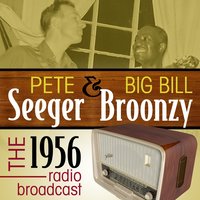
Información de la canción En esta página puedes leer la letra de la canción Mrs. Mcgrath de -Pete Seeger
Canción del álbum: The 1956 Radio Broadcast
En el género:Блюз
Fecha de lanzamiento:31.05.2013
Idioma de la canción:Inglés
Sello discográfico:Master Classics
Seleccione el idioma al que desea traducir:
¡Escribe lo que piensas sobre la letra!
Otras canciones del artista:
| Nombre | Año |
|---|---|
| 2010 | |
Missisipi River Blues ft. Bill Big Broonzy | 2006 |
| 2019 | |
| 2019 | |
| 2014 | |
| 2013 | |
| 2014 | |
| 2015 | |
| 2013 | |
| 2015 | |
| 2010 | |
| 2014 | |
| 2014 | |
| 2005 | |
| 2011 | |
| 2011 | |
| 2011 | |
| 2011 | |
| 2011 | |
| 2011 |