| The House At The Top Of The Tree (original) | The House At The Top Of The Tree (traducción) |
|---|---|
| There’s a house at the top of a tree | Hay una casa en la copa de un árbol |
| There’s a house at the top of a tree | Hay una casa en la copa de un árbol |
| In the house there’s a room | En la casa hay una habitación |
| In the room there’s a chair | En la habitación hay una silla. |
| And sitting in the chair is you | Y sentado en la silla estás tú |
| There’s a nose at the end of a snout | Hay una nariz al final de un hocico |
| Of a dog with his head out the window | De un perro con la cabeza fuera de la ventana |
| Of a car that’s driving away from the tree | De un coche que se aleja del árbol |
| And at the top of a tree there’s a house | Y en la copa de un árbol hay una casa |
| And in the house there’s a room and in the room | Y en la casa hay un cuarto y en el cuarto |
| There’s a chair and in the chair is you | hay una silla y en la silla estas tu |
| There’s a plan to eat the house | Hay un plan para comerse la casa |
| In the mind of a mouse in the woods | En la mente de un ratón en el bosque |
| And the mouse in the woods has a smell that’s detected | Y el ratón en el bosque tiene un olor que se detecta |
| By the nose at the end of a snout of a dog | Por la nariz al final del hocico de un perro |
| And the dog has his head out the window of a car | Y el perro saca la cabeza por la ventanilla de un coche |
| And the car is driving away from the tree | Y el coche se aleja del árbol. |
| And at the top of a tree there’s a house | Y en la copa de un árbol hay una casa |
| And in the house there’s a room and in the room | Y en la casa hay un cuarto y en el cuarto |
| There’s a chair and in the chair is you | hay una silla y en la silla estas tu |
| There are no more potato chips left | No quedan más papas fritas |
| In the empty bag in your hand | En la bolsa vacía en tu mano |
| And the crumpling sound of the empty bag | Y el sonido al desmoronarse de la bolsa vacía |
| Makes the mice get mad | Hace que los ratones se enojen |
| And when the mice get mad | Y cuando los ratones se enfadan |
| It leads to a plan to eat the house | Conduce a un plan para comerse la casa. |
| And the plan’s in the mind of the mouse in the woods | Y el plan está en la mente del ratón en el bosque |
| And the mouse in the woods has a smell that’s detected | Y el ratón en el bosque tiene un olor que se detecta |
| By the nose at the end of a snout of a dog | Por la nariz al final del hocico de un perro |
| And the dog has his head out the window of a car | Y el perro saca la cabeza por la ventanilla de un coche |
| And the car is driving away from the tree | Y el coche se aleja del árbol. |
| And at the top of a tree there’s a house | Y en la copa de un árbol hay una casa |
| And in the house there’s a room and in the room | Y en la casa hay un cuarto y en el cuarto |
| There’s a chair and in the chair is you | hay una silla y en la silla estas tu |
| And the reason there are no more chips | Y la razón por la que no hay más chips |
| In the empty bag in your hand | En la bolsa vacía en tu mano |
| Is that the crumpling sound of the empty bag | ¿Es ese el sonido al arrugarse de la bolsa vacía? |
| Makes the mice get mad | Hace que los ratones se enojen |
| Which leads to a plan | Lo que lleva a un plan |
| To eat the house | Para comer la casa |
| But just in time | Pero justo a tiempo |
| The dog arrives | el perro llega |
| To give to the mouse | Para dar al raton |
| The potato chips | las papas fritas |
| That you took from the bag | Que sacaste de la bolsa |
| And gave to the dog | y le dio al perro |
| To deliver to the mouse | Para entregar al ratón |
| So the mouse would not eat you | Para que el ratón no te comiera |
Traducción de la letra de la canción The House At The Top Of The Tree - They Might Be Giants
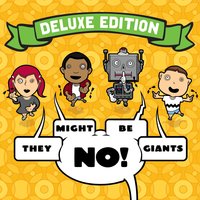
Información de la canción En esta página puedes leer la letra de la canción The House At The Top Of The Tree de -They Might Be Giants
Canción del álbum: No!
En el género:Иностранный рок
Fecha de lanzamiento:17.06.2010
Idioma de la canción:Inglés
Sello discográfico:Idlewild
Seleccione el idioma al que desea traducir:
¡Escribe lo que piensas sobre la letra!
Otras canciones del artista:
| Nombre | Año |
|---|---|
Istanbul (Not Constantinople) ft. John Flansburgh, John Linnell | 1990 |
| 2013 | |
| 1996 | |
Kiss Me Son of God ft. Bill Krauss | 1988 |
Birdhouse in Your Soul ft. John Flansburgh, John Linnell | 1990 |
| 1994 | |
| 2013 | |
Particle Man ft. John Flansburgh, John Linnell | 1990 |
| 2022 | |
| 2018 | |
Ana Ng ft. Bill Krauss | 1988 |
They Might Be Giants ft. John Flansburgh, John Linnell | 1990 |
| 2015 | |
| 2010 | |
Your Racist Friend ft. John Flansburgh, John Linnell | 1990 |
Lucky Ball and Chain ft. John Flansburgh, John Linnell | 1990 |
| 2018 | |
Twisting ft. John Flansburgh, John Linnell | 1990 |
Dead ft. John Flansburgh, John Linnell | 1990 |
We Want a Rock ft. John Flansburgh, John Linnell | 1990 |