| Gypsy Davy (original) | Gypsy Davy (traducción) |
|---|---|
| It was late last night | era tarde anoche |
| When the boss come home | Cuando el jefe vuelve a casa |
| He was askin' about his lady | Estaba preguntando por su dama |
| The only answer he received | La única respuesta que recibió |
| She’s gone with a Gypsy Davey | Ella se ha ido con un Gypsy Davey |
| Gone with a Gypsy Dave | Ido con un gitano Dave |
| Go saddle for me my buckskin horse | Ve a ensillar por mí mi caballo de piel de ante |
| And a hundred dollar saddle | Y una silla de montar de cien dólares |
| Point out to me their wagon tracks | indícame las huellas de sus carretas |
| And after them I’ll travel, after them I’ll ride | Y tras ellos viajaré, tras ellos cabalgaré |
| Well, I had not rode till the midnight moon | Bueno, no había cabalgado hasta la luna de medianoche. |
| Till I saw the campfire gleaming | Hasta que vi la fogata brillando |
| I heard the notes of the big guitar | Escuché las notas de la gran guitarra |
| And the voice of the gypsies singing | Y la voz de los gitanos cantando |
| That song of the Gypsy Dave | Esa canción del Gypsy Dave |
| There in the light of the camping fire | Allí a la luz de la fogata |
| Saw her fair face beaming | Vi su bello rostro radiante |
| Her heart in tune with the big guitar | Su corazón en sintonía con la gran guitarra |
| And the voice of the gypsies singing | Y la voz de los gitanos cantando |
| That song of the Gypsy Dave | Esa canción del Gypsy Dave |
| Have you forsaken your house and home? | ¿Has abandonado tu casa y tu hogar? |
| You forsaken your baby | Abandonaste a tu bebé |
| Have you forsaken your husband, dear | ¿Has abandonado a tu marido, querida? |
| To go with the Gypsy Davey? | ¿Ir con el gitano Davey? |
| And sing with the Gypsy Dave | Y cantar con el gitano Dave |
| That song of the Gypsy Dave | Esa canción del Gypsy Dave |
| Yes, I’ve forsaken my husband, dear | Sí, he abandonado a mi marido, querida. |
| To go with the Gypsy Davey | Para ir con el gitano Davey |
| And I’ve forsaken my mansion high | Y he abandonado mi mansión alta |
| But not my blue-eyed baby | Pero no mi bebé de ojos azules |
| Not my blue-eyed babe | No es mi nena de ojos azules |
| She smiled to leave her husband dear | Ella sonrió para dejar a su esposo querido |
| And go with the Gypsy Davey | E ir con el gitano Davey |
| But the tears come a-trickling down her cheeks | Pero las lágrimas corren por sus mejillas |
| To think of the blue-eyed baby | Pensar en el bebé de ojos azules |
| Pretty little blue-eyed babe | Pequeña y bonita nena de ojos azules |
| Take off, take off your buckskin gloves | Quítate, quítate los guantes de piel de ante |
| Made of Spanish leather | Fabricado en cuero español |
| Give to me your lily-white hair | Dame tu cabello blanco de lirio |
| And we’ll ride back home together | Y volveremos juntos a casa |
| And we’ll ride home again | Y volveremos a casa |
| No, I won’t take off my buckskin gloves | No, no me quitaré los guantes de piel de ante. |
| They’re made of Spanish leather | Están hechos de cuero español. |
| I’ll go my way from day to day | Seguiré mi camino día a día |
| And sing with the Gypsy Davey | Y cantar con el gitano Davey |
| That song of the Gypsy Dave | Esa canción del Gypsy Dave |
| That song of the Gypsy Davey | Esa canción del Gypsy Davey |
| That song of the Gypsy Dave | Esa canción del Gypsy Dave |
Traducción de la letra de la canción Gypsy Davy - Woody Guthrie
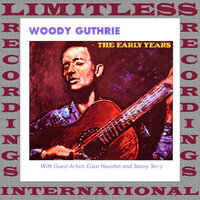
Información de la canción En esta página puedes leer la letra de la canción Gypsy Davy de -Woody Guthrie
Fecha de lanzamiento:05.11.2019
Idioma de la canción:Inglés
Seleccione el idioma al que desea traducir:
¡Escribe lo que piensas sobre la letra!
Otras canciones del artista:
| Nombre | Año |
|---|---|
| 2019 | |
| 2019 | |
| 2019 | |
| 2019 | |
| 2019 | |
| 2008 | |
| 2019 | |
| 2019 | |
| 2019 | |
| 2019 | |
| 2019 | |
| 2019 | |
| 2019 | |
| 2019 | |
| 2019 | |
| 2019 | |
| 2019 | |
| 2019 | |
| 2019 | |
| 2019 |