| Familiar Expressions (original) | Familiar Expressions (traducción) |
|---|---|
| This next thing. | Esto siguiente. |
| This next thing is about the English language. | Lo siguiente es sobre el idioma inglés. |
| Its about little expressions we use. | Se trata de pequeñas expresiones que usamos. |
| The little expressions, we all use them all the time. | Las pequeñas expresiones, todos las usamos todo el tiempo. |
| And we never really seem to examine these expressions very carefully at all. | Y parece que en realidad nunca examinamos estas expresiones con mucho cuidado. |
| We just sort of say these things, as if they really made sense. | Simplemente decimos estas cosas, como si realmente tuvieran sentido. |
| Like. | Me gusta. |
| “Legally Drunk”. | “Legalmente borracho”. |
| Well if its legal? | Bueno, si es legal? |
| Whats the fuckin’ problem!? | ¿Cuál es el maldito problema? |
| Hey! | ¡Oye! |
| Leave my friend alone officer, he’s legally drunk!” | ¡Deje a mi amigo en paz, oficial, está legalmente borracho! |
| You know you can stick it. | Sabes que puedes pegarlo. |
| Why do we always assume people can know where they can stick it? | ¿Por qué siempre asumimos que las personas pueden saber dónde pueden pegarlo? |
| Suppose you don’t know, suppose your a new guy. | Supongamos que no lo sabes, supongamos que eres un chico nuevo. |
| You have absolutely no idea where to stick it. | No tienes ni idea de dónde pegarlo. |
| I think there ought to be a government title on “Where to Stick it”. | Creo que debería haber un título del gobierno sobre "Dónde pegarlo". |
| Now that i think of it, i belive there is a government booklet like that, they send it to ya on April 15th. | Ahora que lo pienso, creo que hay un folleto del gobierno como ese, te lo envían el 15 de abril. |
| Undisputed Heavyweight Champion. | Campeón indiscutible de peso pesado. |
| Well if its undisputed, whats all the fighting about? | Bueno, si es indiscutible, ¿de qué se trata toda la lucha? |
| It’s the quiet ones ya gotta watch. | Son los silenciosos que tienes que ver. |
| Ya know that one eh? | Ya sabes ese eh? |
| Everytime ya see a story about a serial killer on T.V. What do they do? | Cada vez que ves una historia sobre un asesino en serie en la televisión, ¿qué hacen? |
| they bring on the neighbor. | traen al prójimo. |
| And the neighbor says “Well, he was always very quiet.” | Y el vecino dice “Pues siempre fue muy callado”. |
| And someone in the room says “Its the quiet ones ya gotta watch. | Y alguien en la habitación dice: “Son los silenciosos que tienes que vigilar. |
| This sounds to me like a very dangerous assumption. | Esto me parece una suposición muy peligrosa. |
| I will bet you anything that while your watching a quiet one, a noisy one will fucking kill you! | ¡Te apuesto cualquier cosa a que mientras ves uno silencioso, uno ruidoso te matará! |
| Suppose your in a bar and one guy is reading a book not bothering anybody and another is standing in the front with a machete banging on the door saying “I’LL KILL THE NEXT MOTHER FUCKER WHO COMES IN HERE!” | Supongamos que estás en un bar y un tipo está leyendo un libro sin molestar a nadie y otro está parado en el frente con un machete golpeando la puerta diciendo "¡MATARÉ AL PRÓXIMO HIJO DE MADRE QUE ENTRE AQUÍ!" |
| ……who ya gonna watch? | ...... ¿a quién vas a vigilar? |
| Ya goddam right. | Maldita sea. |
| Lock em up and throw away the key. | Enciérralos y tira la llave. |
| This is really stupid. | Esto es realmente estúpido. |
| Where ya gonna throw the key? | ¿Dónde vas a tirar la llave? |
| Right out in front of the jail? | ¿Justo enfrente de la cárcel? |
| His friends will find it! | ¡Sus amigos lo encontrarán! |
| How far can you throw a key? | ¿Hasta dónde puedes lanzar una llave? |
| 60. 50 feet at the most. | 60. 50 pies como máximo. |
| Even if ya lay it flat on its side like that, and scale it. | Incluso si lo pones plano de lado así, y lo escalas. |
| Waddya get? | ¿Qué entiendes? |
| An extra 10 feet, tops. | Un extra de 10 pies, máximo. |
| This is a stupid idea. | Esta es una idea estúpida. |
| Needs to be completely rethought. | Necesita ser completamente repensado. |
| Down the tubes. | Por los tubos. |
| Hear that one a lot, the people say “Ahhh the country is goin’ down the tubes” …..What tubes? | Escuche eso mucho, la gente dice "Ahhh, el país se está yendo por los tubos"... ¿Qué tubos? |
| Have you seen any tubes? | ¿Has visto algún tubo? |
| Where are these tubes? | ¿Dónde están estos tubos? |
| And where do they go? | ¿Y adónde van? |
| And how come there’s more then one tube? | ¿Y cómo es que hay más de un tubo? |
| It would seem to me, one country, one tube. | Me parecería, un país, un tubo. |
| What, does every state have to have its own tube now? | ¿Qué, cada estado tiene que tener su propio tubo ahora? |
| One tube is all ya need. | Un tubo es todo lo que necesitas. |
| But a tube that big, somebody would have seen it by now. | Pero un tubo tan grande, alguien ya lo habría visto. |
| “somebody would of been like “hey, Joey, joey, look at the fuckin’ tube” Big ass fuckin’ tube ova here. | "Alguien habría dicho 'oye, Joey, Joey, mira el maldito tubo'. Gran culo, jodidos óvulos de tubo aquí. |
| Ya never hear that. | Nunca escuchaste eso. |
| Ya know why? | ¿Sabes por qué? |
| No tubes. | Sin tubos. |
| We don’t have tube 1. We are essentially, tubeless. | No tenemos tubo 1. Básicamente, no tenemos cámara. |
| Takes the cake. | Toma el pastel. |
| Ya know, say “Boy he really takes the cake”……Where? | Ya sabes, di "Chico, él realmente se lleva la palma"... ¿Dónde? |
| Where do ya take a cake? | ¿Dónde tomas un pastel? |
| to the movies? | ¿al cine? |
| Ya know where i would take a cake, down to the bakery, to see the otha cakes. | Ya sabes dónde llevaría un pastel, a la panadería, para ver los otros pasteles. |
| And how come he takes the cake, how come he doesn’t take the pie? | ¿Y cómo es que se lleva el pastel, cómo es que no se lleva el pastel? |
| The pie is easier carrying then the cake. | El pastel es más fácil de transportar que el pastel. |
| Easy as pie. | Muy fácil. |
| Hey,wait. | Hey, espera. |
| Cake is not too hard to carry either. | El pastel tampoco es demasiado difícil de llevar. |
| Piece of cake. | Pedazo de pastel. |
| The greatest thing since sliced bread! | ¡Lo mejor desde el pan rebanado! |
| So this is it, huh folks? | Así que esto es todo, ¿eh amigos? |
| Couple hundred thousand years, The fuckin’ pyramids for christ sake! | ¡Un par de cientos de miles de años, las malditas pirámides por el amor de Dios! |
| Panama Canal! | ¡Canal de Panama! |
| The great wall of China! | ¡La Gran Muralla de China! |
| Even a lava lamp. | Incluso una lámpara de lava. |
| To me is greater then sliced bread. | Para mí es más grande que el pan rebanado. |
| Whats so great about sliced bread? | ¿Qué tiene de bueno el pan de molde? |
| Ya got a knife, ya got a loaf of bread, SLICE THE FUCKIN’ THING! | ¡Tienes un cuchillo, tienes una hogaza de pan, CORTA LA PUTA COSA! |
| And get on with your life. | Y sigue con tu vida. |
| Out walkin’ the streets. | Caminando por las calles. |
| Ya know guy gets a parole. | Ya sabes, el tipo obtiene una libertad condicional. |
| “Now instead of being in prison this guy is out walkin’ the streets”. | “Ahora, en lugar de estar en prisión, este tipo está caminando por las calles”. |
| How do we know? | ¿Como sabemos? |
| Maybe the guys home bangin’ the baby sitter. | Tal vez los chicos se están tirando a la niñera. |
| Not everyone who gets a parole is out walkin’ the fuckin’ streets. | No todos los que obtienen una libertad condicional están caminando por las malditas calles. |
| Lotta times they steal a car ya know. | Muchas veces roban un auto, ya sabes. |
| But we oughta be glad. | Pero deberíamos estar contentos. |
| Thank god he stole a car, least he’s not out walkin’ the streets. | Gracias a Dios que robó un auto, al menos no está caminando por las calles. |
| Fine and dandy. | Fino y elegante. |
| That’s an old fashion one, isn’t it, yea. | Esa es una pasada de moda, ¿no es así? |
| Say to a guy “How are ya” “Fine and dandy” Not me, i never say that, ya know how come? | Dile a un chico "¿Cómo estás?" "Bien y elegante" Yo no, nunca digo eso, ¿sabes por qué? |
| Cause I’m never both of those things at the same time. | Porque nunca soy ambas cosas al mismo tiempo. |
| Sometimes I’m fine, not dandy. | A veces estoy bien, no dandy. |
| Close to dandy, approaching dandy, in the vicinity of dandyhood, not quite fully dandy. | Cercano al dandy, acercándose al dandy, en la vecindad del dandy, no del todo dandy. |
| Other times, i am indeed, highly dandy. | Otras veces, soy de hecho, muy dandy. |
| However, not fine. | Sin embargo, no está bien. |
| One time, one time. | Una vez, una vez. |
| 1965. August. | 1965. Agosto. |
| For about an hour. | Por una hora aproximadamente. |
| I was both fine and dandy for about the same time. | Estuve bien y elegante durante más o menos el mismo tiempo. |
| BUT NOBODY ASKED ME HOW I WAS! | ¡PERO NADIE ME PREGUNTO COMO ESTABA! |
| And I could of told ’em. | Y podría haberles dicho. |
| I could of told ’em. | Podría haberles dicho. |
| I could of told em. | Podría haberles dicho. |
| I could of said to the person, Fine and Dandy. | Podría haberle dicho a la persona, Fine and Dandy. |
| I consider it a lost opportunity. | Lo considero una oportunidad perdida. |
| Walkin’ Papers. | Papeles de paseo. |
| Ya know, guy gets fired. | Ya sabes, el tipo es despedido. |
| they say “Jeez, poor guy well they gave him his walkin’ papers today.” | dicen: "Por Dios, pobre tipo, bueno, hoy le dieron sus papeles para caminar". |
| Did you ever get any walkin’ papers? | ¿Alguna vez obtuviste papeles para caminar? |
| Seriously? | ¿En serio? |
| Believe me in my life i got fired a lot of times. | Créanme en mi vida, me despidieron muchas veces. |
| You can tell. | Puedes decir. |
| Never got any walkin’ papers. | Nunca obtuve papeles para caminar. |
| Never got a pink slip, either. | Nunca obtuve un recibo rosa, tampoco. |
| Ya know what i would get? | ¿Sabes lo que obtendría? |
| A guy would come around to my desk and say “GET THE FUCK OUTTA HERE!” | Un tipo se acercaba a mi escritorio y decía: "¡FUERA DE AQUÍ!" |
| You don’t need paper for that. | No necesitas papel para eso. |
| It’s like the riot act. | Es como el acto antidisturbios. |
| The riot act. | Acto antidisturbios. |
| They keep tellin’ ya there gonna read that to ya. | Siguen diciéndote que te lo leerán. |
| Have you heard this thing at all? | ¿Has oído esto en absoluto? |
| Especially when your a kid, they threaten ya. | Especialmente cuando eres un niño, te amenazan. |
| “You wait till ya father comes home, hes gonna read you the riot act!” | “¡Espera hasta que tu padre llegue a casa, él te leerá el acto de disturbios!” |
| Tell him I already read it myself! | ¡Dile que ya lo leí yo mismo! |
| And I didn’t like it either. | Y tampoco me gustó. |
| I consider it wordy and poorly thought out. | Lo considero prolijo y mal pensado. |
| He wants to read me somethin’ how about the Gentlemens guide to the Golden Age of Blow Jobs (Golden Age of Blow Jobs… I don’t know either). | Quiere leerme algo sobre la guía para caballeros de la edad de oro de las mamadas (Golden Age of Blow Jobs… Yo tampoco lo sé). |
| More then happy. | Más que feliz. |
| I bet you say that sometimes, don’t ya? | Apuesto a que dices eso a veces, ¿no? |
| Once in a while you say to somebody. | De vez en cuando le dices a alguien. |
| “Ohhh I’d be more then happy to do that.” | "Ohhh, estaría más que feliz de hacer eso". |
| How can you be more then happy? | ¿Cómo puedes ser más que feliz? |
| To me this sounds like a dangerous mental condition. | Para mí esto suena como una condición mental peligrosa. |
| “We had to put Dave in the mental home. | “Tuvimos que poner a Dave en el hogar mental. |
| He was, whahaha, more then happy”. | Estaba, jajaja, más que feliz”. |
| One more of these. | Uno más de estos. |
| In your own words. | En sus propias palabras. |
| People say that to you. | La gente te dice eso. |
| ya know, they did that a lot in the classroom. | ya sabes, lo hacían mucho en el salón de clases. |
| Or in a court room. | O en una sala de audiencias. |
| They’ll say to ya “Tell us, in your own words”. | Te dirán “Cuéntanos, con tus propias palabras”. |
| Do you have your own words? | ¿Tienes tus propias palabras? |
| Hey, I’m using the ones everybody else has been using. | Oye, estoy usando los que todos los demás han estado usando. |
| Next time they tell ya to say something in your own words say “nikwakquarndayquanfloo!” | La próxima vez que te digan que digas algo con tus propias palabras, di “¡nikwakquarndayquanfloo!” |
Traducción de la letra de la canción Familiar Expressions - George Carlin
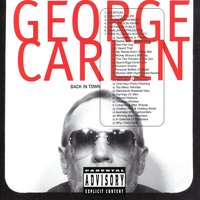
Información de la canción En esta página puedes leer la letra de la canción Familiar Expressions de -George Carlin
Canción del álbum: Back in Town
Fecha de lanzamiento:29.03.1996
Idioma de la canción:Inglés
Sello discográfico:Laugh.com
Restricciones de edad: 18+
Seleccione el idioma al que desea traducir:
¡Escribe lo que piensas sobre la letra!
Otras canciones del artista:
| Nombre | Año |
|---|---|
| 2006 | |
| 1981 | |
| 2006 | |
| 2008 | |
| 2008 | |
| 2008 | |
| 2006 | |
| 2008 | |
| 2008 | |
| 2008 | |
| 2008 | |
| 2008 | |
| 2008 | |
| 2008 | |
| 1999 | |
| 2006 | |
| 2006 | |
| 2008 | |
| 2008 | |
| 2006 |