| No One Questions Things (original) | No One Questions Things (traducción) |
|---|---|
| Do you remember…OK. | ¿Te acuerdas... está bien. |
| Now, OK. | Ahora ok. |
| You remember Barbara Bush? | ¿Recuerdas a Bárbara Bush? |
| I call her the silver douche bag. | Yo la llamo la idiota plateada. |
| You remember her? | ¿La recuerdas? |
| OK. | ESTÁ BIEN. |
| Barbara Bush. | Bárbara Bush. |
| She is the mother of Governor George Bush. | Es la madre del gobernador George Bush. |
| I call him Governor Bush because that’s the only elected office he ever held legally in our country, OK? | Lo llamo gobernador Bush porque ese es el único cargo electo que ocupó legalmente en nuestro país, ¿de acuerdo? |
| George Bush, Governor Bush. | George Bush, gobernador Bush. |
| Yeah. | Sí. |
| I don’t care where they hang his portrait. | No me importa dónde cuelguen su retrato. |
| I don’t care how big his library is. | No me importa cuán grande sea su biblioteca. |
| He’ll always be Governor Bush. | Siempre será el gobernador Bush. |
| I don’t even capitalize his name when I type it anymore. | Ya ni siquiera escribo su nombre en mayúsculas cuando lo escribo. |
| So she’s the mother of Governor George Bush. | Así que ella es la madre del gobernador George Bush. |
| She’s also the wife of his father, George H. W. Bush who did become president in the normal, legal, traditional manner. | También es la esposa de su padre, George H. W. Bush, quien se convirtió en presidente de la manera normal, legal y tradicional. |
| And when he did, she came along for the ride as first lady, and that’s been the tradition up ’til now. | Y cuando lo hizo, ella se presentó como primera dama, y esa ha sido la tradición hasta ahora. |
| A man has been elected and the woman has come along for the ride as the first lady. | Se ha elegido a un hombre y la mujer se ha sumado al viaje como primera dama. |
| And usually, as in American life in general, the woman is condescended to, patronized, given something to do to keep her busy. | Y por lo general, como en la vida estadounidense en general, se condesciende a la mujer, se la patrocina, se le da algo que hacer para mantenerla ocupada. |
| A lot of times, they give her a charity or a cause, something she can champion. | Muchas veces, le dan una obra de caridad o una causa, algo que ella puede defender. |
| Betty Ford was told to drink. | A Betty Ford le dijeron que bebiera. |
| Remember that? | ¿Recuérdalo? |
| Yeah, that was…that was Betty Ford’s assignment. | Sí, esa fue... esa fue la tarea de Betty Ford. |
| “Betty, you get drunk and get totally falling down, fucked-up, shit-faced drunk, OK? | “Betty, te emborrachas y te caes completamente, jodido, borracho con la cara de mierda, ¿de acuerdo? |
| You just get fucked up drunk, and we’ll hose you down, baby. | Simplemente te emborrachas y te lavaremos con la manguera, bebé. |
| We’ll hose you down. | Te mangueraremos. |
| We’ll put you in a facility, you’ll get sober, and then we’ll put your name on the facility. | Lo pondremos en una instalación, se pondrá sobrio y luego pondremos su nombre en la instalación. |
| Liza Minnelli can get sober, and everything is going to be OK. | Liza Minnelli puede ponerse sobria y todo va a estar bien. |
| Right?” | ¿Derecha?" |
| That was her assignment. | Esa era su tarea. |
| Barbara Bush’s assignment was getting children to read. | La tarea de Barbara Bush era lograr que los niños leyeran. |
| Remember that? | ¿Recuérdalo? |
| Getting children to read. | Hacer que los niños lean. |
| They figured she had had so much success with George that she would be a natural to get children to read, which misses the point completely. | Pensaron que había tenido tanto éxito con George que sería natural hacer que los niños leyeran, lo cual no entiende el punto por completo. |
| Not important to get children to read. | No es importante hacer que los niños lean. |
| Children who want to read are going to read. | Los niños que quieren leer van a leer. |
| Kids who want to learn to read are going to learn to read. | Los niños que quieren aprender a leer van a aprender a leer. |
| Much more important to teach children to question what they read. | Mucho más importante enseñar a los niños a cuestionar lo que leen. |
| Children should be taught to question everything. | A los niños se les debe enseñar a cuestionar todo. |
| To question everything they read, everything they hear. | A cuestionar todo lo que leen, todo lo que escuchan. |
| Children should be taught to question authority. | A los niños se les debe enseñar a cuestionar la autoridad. |
| Parents never teach their children to question authority because parents are authority figures themselves, and they don’t want to undermine their own bullshit inside the household. | Los padres nunca les enseñan a sus hijos a cuestionar la autoridad porque los padres son ellos mismos figuras de autoridad y no quieren socavar sus propias tonterías dentro del hogar. |
| So, they stroke the kid and the kid strokes them, and they all stroke each other, and they all grow up all fucked up, and they come to shows like this. | Entonces, acarician al niño y el niño los acaricia a ellos, y todos se acarician entre ellos, y todos crecen jodidos, y vienen a espectáculos como este. |
Traducción de la letra de la canción No One Questions Things - George Carlin
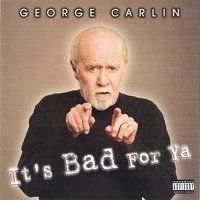
Información de la canción En esta página puedes leer la letra de la canción No One Questions Things de -George Carlin
Canción del álbum: It's Bad For Ya
Fecha de lanzamiento:31.03.2008
Idioma de la canción:Inglés
Sello discográfico:Laugh.com
Restricciones de edad: 18+
Seleccione el idioma al que desea traducir:
¡Escribe lo que piensas sobre la letra!
Otras canciones del artista:
| Nombre | Año |
|---|---|
| 2006 | |
| 1981 | |
| 2006 | |
| 2008 | |
| 2008 | |
| 2008 | |
| 2006 | |
| 2008 | |
| 2008 | |
| 2008 | |
| 2008 | |
| 2008 | |
| 2008 | |
| 2008 | |
| 1999 | |
| 2006 | |
| 2006 | |
| 2008 | |
| 2008 | |
| 2006 |